
Ground-Source vs Air-to-Water Heat Pumps: Which Is Right for Your Home?
Choosing the right heat pump can be challenging, especially when comparing two popular options: ground-source and air-to-water heat pumps.
Each has its own advantages, disadvantages and suitable applications. The right choice can produce substantial savings and improved comfort. Find out which technology best matches your lifestyle and heating demand.
What are ground-source heat pumps?
Ground-source heat pumps use thermal energy stored in the earth to provide heating. They work with buried collectors or borehole probes that extract energy from the ground and deliver useful heat to the home.
| Advantages | Disadvantages |
|---|---|
| High energy efficiency regardless of outdoor weather | Higher initial installation costs |
| Potentially lower long-term costs thanks to a renewable heat source | Requires suitable land or access for ground-loop installation |
| Long service life, potentially up to 25–30 years | Excavation work can temporarily disturb the garden |
| Helps reduce carbon emissions |
For example, if you live in a rural area with plenty of garden space, a ground-source heat pump could be a good option. Over time, energy savings and a lower environmental impact may help offset the higher initial investment.
What are air-to-water heat pumps?
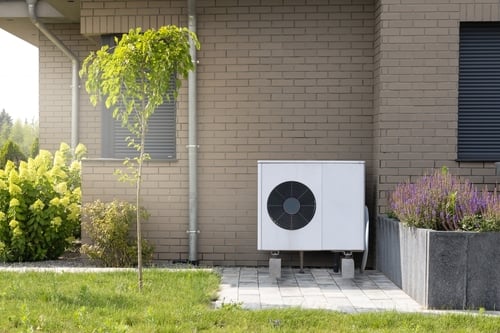
Air-to-water heat pumps extract energy from the outdoor air, even at relatively low temperatures. They are easier to install and generally cost less upfront, although performance can vary with local weather conditions.
| Advantages | Disadvantages |
|---|---|
| Lower upfront costs and faster installation | Efficiency can decrease at very low outdoor temperatures |
| Suitable for urban areas with limited space | Outdoor unit generates some noise |
| Can operate in most climate conditions | Running costs may rise in extreme weather |
| Typically simpler maintenance than some other systems |
For example, in an apartment or a compact urban property, an air-to-water heat pump may fit more easily into the available space. Relatively quick installation also makes it possible to upgrade the heating system with less disruption.
Key differences between ground-source and air-to-water heat pumps

To make an informed choice, it is important to understand the main differences between these two technologies.
- Energy efficiency: ground-source systems can achieve more consistent long-term performance because ground temperatures are relatively stable, while air temperatures change.
- Upfront costs: air-to-water systems are generally less expensive to install, whereas ground-source systems involve substantial groundworks costs that may be recovered over time.
- Space requirements: ground-source systems need suitable land or drilling access, while air-to-water units can be fitted in many locations, including properties with limited space.
- Service life: ground-source systems may offer a longer service life and a durable heating solution.
- Environmental impact: both technologies can reduce emissions, while a high-efficiency ground-source installation may have a smaller impact in some applications.
Choose the solution that offers the best balance of efficiency, cost and available space. If sustainability and lower energy bills are priorities, either type of heat pump can be a good option when properly designed. ECO-TEC provides options adapted to your needs, focusing on efficiency and sustainability across different buildings and climates.
Long-term costs: what should you consider?
Total cost of ownership is an essential consideration. Although ground-source heat pumps have a higher purchase and installation cost, they may offer significant long-term savings thanks to stable operating efficiency. Air-to-water heat pumps are usually more affordable initially, but their running costs can be higher in extreme weather.
Consider factors such as:
- local energy prices;
- your specific heating and cooling requirements;
- equipment service life;
- availability of grants or subsidies for heat pump installation in your area.
If you plan to stay in your home for many years, a ground-source system could be more cost-effective. Lower energy bills over time can also help justify the investment, while an efficient heating system may add value to the property.
How do you make the right choice?
Read our article on how to choose a heat pump! This is not simply a technical decision: the right system depends on the needs of your home. These steps can help:
- Assess the space available. If you have a spacious garden, a ground-source system may be suitable.
- Calculate the total long-term cost. Consider energy prices and the potential savings from each technology.
- Seek expert advice. Ask a heat pump specialist to evaluate your options and recommend a suitable design.
- Check the local climate conditions. Extreme temperatures can affect air-to-water heat pump efficiency.
- Consider environmental impact. Choosing a lower-emission heating system supports a more sustainable future.
- Compare the offers available. Some suppliers provide complete packages covering installation, maintenance and extended warranties.
Whichever option you choose, proper installation and regular maintenance are essential to obtain the expected benefits. Select a reliable provider capable of designing and commissioning the system correctly.
Upgrade your home with ECO-TEC sustainable heat pump technology and enjoy comfort, efficiency and potential savings over the long term.
The choice between ground-source and air-to-water heat pumps depends on your heating requirements, budget and site conditions. Ground-source technology may be suitable if you value consistent efficiency and have the space and funds for groundworks. Air-to-water technology may be a better fit if you want a more affordable, flexible system that is easier to install.
Either option represents an investment in energy efficiency and sustainability. To make the right decision for your project, contact us for technical advice and tailored recommendations. This will help you achieve the desired comfort with efficient energy use over time.
