
Case Study: Four ECO-TEC R290 Heat Pumps Replace a Guesthouse Wood Boiler
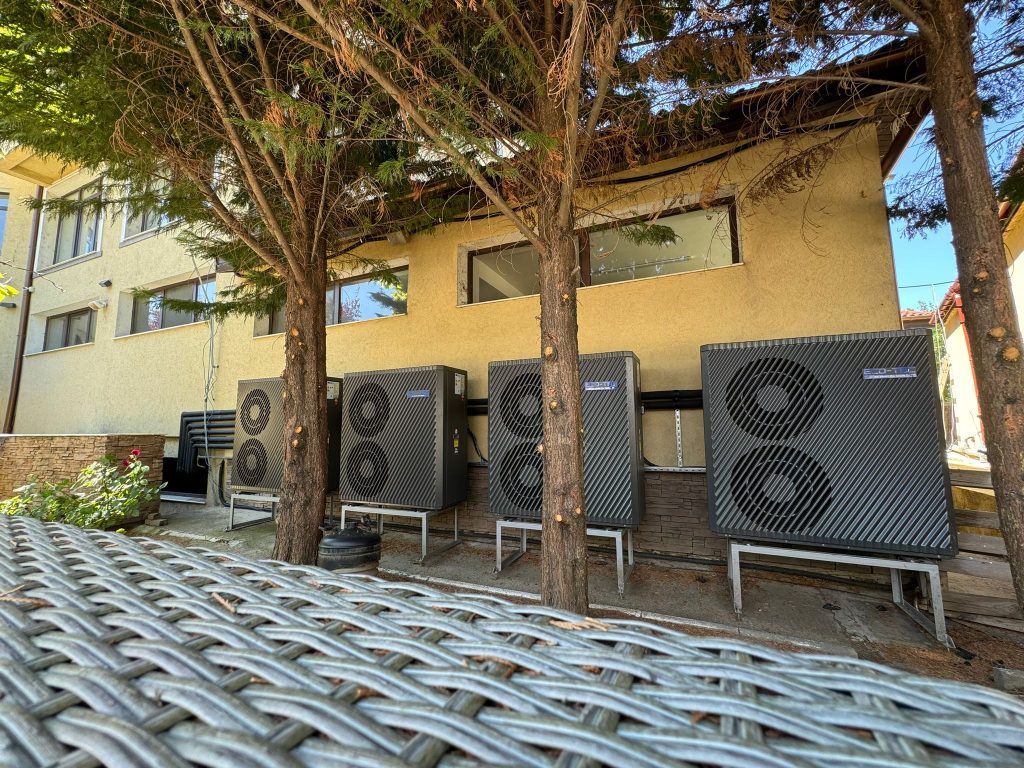
In brief: in a guesthouse project, an existing wood-fired boiler was replaced with four ECO-TEC heat pumps using R290 refrigerant. The main objective was to move to a modern, automated solution that reduces the daily intervention required to operate the system while maintaining building comfort.
| Project details | Implemented solution |
|---|---|
| Building type | Guesthouse |
| Replaced system | Wood-fired boiler |
| Equipment installed | Four ECO-TEC heat pumps |
| Refrigerant | R290 |
| Operational objective | Automation, comfort and less manual intervention in heating operation |
Project background
The guesthouse previously used a wood-fired boiler. Such a system requires regular fuel deliveries, wood handling and attention during operation. For the owner, moving to heat pumps primarily meant replacing a labour-intensive system with an automated one.
The project included the installation of four ECO-TEC heat pumps. The original technical material for this project confirms the use of the natural refrigerant R290.
What actually changed
The fundamental change was replacing the traditional wood-fired heat source with a heat pump system. Instead of regularly feeding and tending a fire, the heating system can operate automatically.
For a guesthouse, this matters because occupants need consistent comfort while the staff should be able to focus on hospitality rather than operating a wood boiler.
Why R290?
The equipment installed in this project uses R290. The original project description associates this choice with the ability to produce higher-temperature water and to maintain building comfort during different parts of the year.
However, we do not extrapolate performance figures that were not measured in this project. Actual flow temperature, COP, SCOP and energy consumption must always be assessed for the specific model and real operating conditions.
The main operational benefit: Automation
An important reason for this project was to eliminate the tasks associated with the wood boiler. Continuous fuel feeding and regular fire tending are no longer necessary for everyday system operation.
From a guesthouse owner’s perspective, this is a practical advantage: the heating system becomes easier to manage and requires less manual work.
Comfort for guests
The project description characterises heat pump operation as quiet and automatic. It also highlights the ability to maintain guesthouse comfort and prepare hot water at elevated temperatures.
In accommodation buildings, these are important criteria because the system must serve occupied spaces as well as usage-related hot water demand.
What we can say about savings
The project also aimed to lower operating costs compared with the wood-fired solution. The original material describes substantial savings and simpler operation.
We do not publish a percentage saving for this project, because the original material contains no comparable before-and-after measurements. We prefer to distinguish measured results from commercial estimates.
Figures we do not invent
The available source material does not provide the individual output of the four units, annual consumption before and after the upgrade, a measured seasonal COP or an exact payback period.
We therefore do not add such figures to this case study. If verified measurements become available later, they can be published separately.
What this project demonstrates
This is a real application in which ECO-TEC R290 heat pumps were used to modernise a guesthouse heating installation and replace a wood-fired boiler.
It differs from a typical single-family home installation: the system serves a hospitality building where comfort continuity and straightforward operation directly matter to the owner.
Further technical documentation
For selecting and sizing a comparable solution, see the comprehensive ECO-TEC guide to heat pumps (Romanian).
You can also browse the ECO-TEC heat pump range. Equipment selection must take account of the heating load, system temperatures and actual building conditions.
Technical analysis and documentation: ECO-TEC Technical Team.
