
Heating Your Home with a Heat Pump: How It Works and Which System to Choose
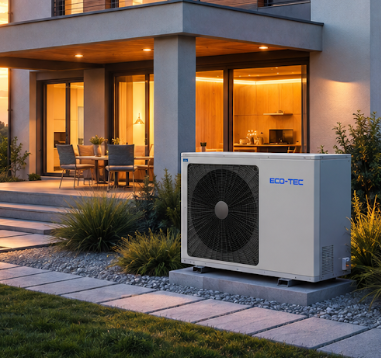
Home heating accounts for a significant share of energy consumption. Choosing an efficient system can affect both thermal comfort and long-term operating costs. For this reason, more and more homeowners are considering heat pump heating as an alternative to conventional systems.
A heat pump can heat a home by using energy available outdoors and transferring it to the heating system. But how does such a system work, which types of heating installation are compatible, and what should you consider before selecting the equipment?
Below, we examine the main aspects you need to know about heating your home with a heat pump.
How does heat pump heating work?
A heat pump extracts thermal energy from the outside environment and transfers it through a refrigerant circuit to the building’s heating system. This process uses electricity, but a significant share of the heat supplied is drawn from the environment.
In an air-to-water heat pump, energy is extracted from the outdoor air and transferred to the water in the heating circuit. The water can then deliver heat through underfloor heating, radiators or other compatible hydronic systems.
If you are considering such a system, explore the ECO-TEC heat pump range to see the available options.
What are the advantages of heat pump heating?
One of the main reasons people consider heat pumps for home heating is their energy efficiency. When correctly sized and installed, the system can supply more thermal energy than the electricity used to operate it.
Key advantages include:
- using energy available in the outdoor environment;
- no combustion of gas or other fuels in the heat pump itself;
- integration with different heat distribution systems;
- temperature control and consistent comfort;
- flexible system configurations matched to the home’s heat demand.
Actual performance depends on several factors, including outdoor temperature, required flow temperature, building insulation and system sizing.
Underfloor heating or radiators with a heat pump?
Underfloor heating works well with heat pumps because it can operate at relatively low water temperatures. The smaller the difference between the heat source temperature and the required heating circuit temperature, the more favourable the heat pump’s operating conditions.
This does not mean heat pumps work only with underfloor heating. Under suitable conditions, they can also operate with radiators.
If your home already has radiators, their dimensions, the room-by-room heat demand and the required operating temperature must be assessed. For further details, see our guide to heat pump compatibility with existing radiators.
Which heat pump is suitable for heating your home?
Do not choose a heat pump solely on the basis of floor area. Two homes of the same size may have different heating loads because of insulation, windows, location, outdoor temperatures and their existing heating systems.
Factors to assess include:
- the building’s design heat load;
- floor area and insulation level;
- the required heating water temperature;
- heating type: underfloor, radiators or a combined system;
- domestic hot water demand;
- local climatic conditions;
- heat pump capacity and technical specifications.
For a closer look at selection criteria, read our guide on how to choose a heat pump.
Depending on the heat demand, you can consider several capacities from the ECO-TEC range, such as the R290 3.1–8.9 kW heat pump, R290 5–14.95 kW heat pump or the R290 8–22 kW heat pump.
Unsure which capacity your home needs? Speak with an ECO-TEC specialist to select equipment based on your property’s actual heating load.
Why does heating water temperature matter?
Heating water temperature is a key factor in heat pump operation. Generally, a system that can heat the building with lower water temperatures provides more favourable operating conditions for the heat pump.
Existing homes with radiators may need higher water temperatures. It is therefore important to confirm that the radiators can deliver sufficient heat at the operating temperatures of the proposed heat pump.
For installations requiring higher water temperatures, consider an ECO-TEC high-temperature R290 heat pump.
How much electricity does heat pump heating use?
There is no universal electricity consumption figure for heat pumps. Usage varies between homes and depends on the building’s heat demand and the conditions under which the equipment operates.
Factors affecting consumption include:
- home energy efficiency;
- outdoor temperature;
- indoor temperature setting;
- heating water temperature;
- heat pump sizing;
- how the system is used and controlled.
A well-insulated home and a correctly sized system create favourable conditions for efficient heat pump operation. For more advice on reducing winter consumption, see our article on lowering energy costs in winter.
Can a heat pump also produce domestic hot water?
Depending on system design, the heat pump can also supply domestic hot water when connected to a suitable storage cylinder.
Cylinder sizing should reflect the number of occupants and expected hot water use. For example, ECO-TEC offers 200 L hot water cylinders, 300 L hot water cylinders and 500 L hot water cylinders, which may be selected according to the installation requirements.
What should you check before installing a heat pump?
Before choosing equipment, assess the entire heating system, not just the heat pump.
Check the building’s heat demand and insulation, the existing installation, whether it uses radiators or underfloor heating, and the water temperatures needed to maintain indoor comfort.
Plan the outdoor unit location and size the other system components before installation.
For further information about the process, see our R290 heat pump installation guide.
Is heating your home with a heat pump worthwhile?
A heat pump can be an efficient way to heat a home when the unit and installation are correctly sized for the building’s needs.
However, no single configuration automatically suits every house. Efficiency depends on the home’s characteristics, the required heating temperature, climatic conditions and how the system components are selected and installed.
That is why assessing the heating load and existing installation before buying is recommended.
To find out which heat pump heating system is suitable for your home, explore the ECO-TEC heat pump range and speak with a specialist about a solution tailored to your project.
